

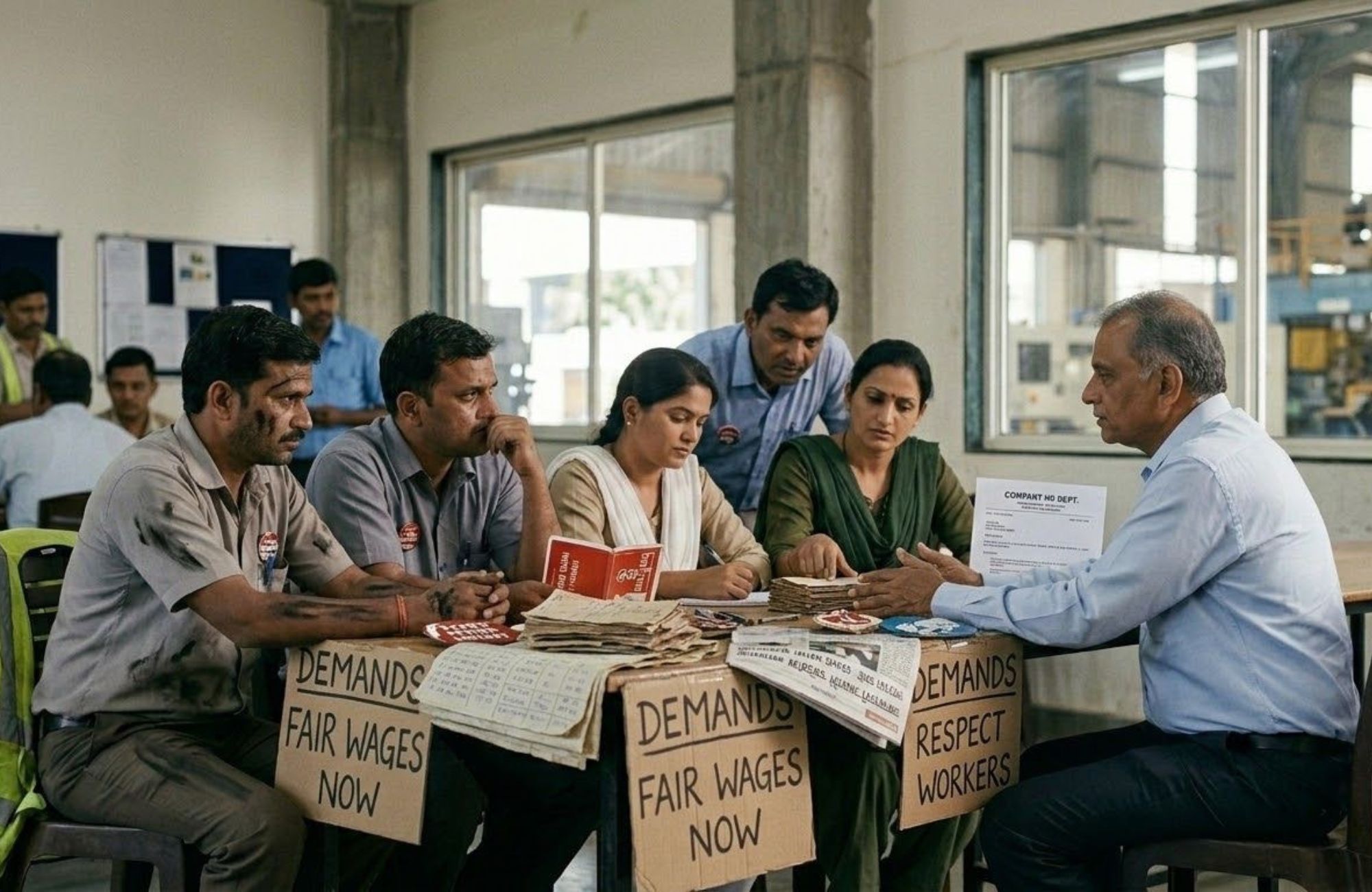
Strikes and lockouts are legal in India, but only if they follow strict procedures under the Industrial Disputes Act, 1947 and the Industrial Relations Code, 2020. If legal conditions such as notice requirements and dispute timelines are not followed, both strikes and lockouts can be declared illegal and may attract penalties.
Introduction
Strikes and lockouts are important tools used by workers and employers during industrial disputes. While employees use strikes to demand better wages or working conditions, employers may impose lockouts to manage labour unrest or maintain discipline.
Indian labour laws regulate these actions to balance workers’ rights with economic stability. The framework ensures disputes are resolved through structured mechanisms rather than sudden disruptions.
Legal Definition Under the Industrial Disputes Act, 1947
What Is a Strike? (Section 2(q))
(q) “strike” means a cessation of work by a body of persons employed in any industry acting in combination or a concerned refusal, or a refusal under a common understanding, of any number of persons who are or have been so employed to continue to work or to accept employment;
What Is a Lockout? (Section 2(l))
(I) “lock-out”
means the ‘[temporary closing of a place of employment], or the suspension of
work, or the refusal by an employer to continue to employ any number of persons employed by him
Key Difference Between Strike and Lockout
- A strike is initiated by employees as a form of protest
- A lockout is initiated by the employer as a control measure
Both are legally recognized but subject to strict compliance requirements.
What Is a Strike Under Indian Labour Law?
A strike is a collective action by workers to stop work in order to press demands related to employment conditions.
Common reasons include:
- Wage disputes
- Poor working conditions
- Job insecurity
- Lack of employee benefits
- Union-related conflicts
However, a strike is not automatically legal and must comply with statutory procedures.
What Is a Lockout?
A lockout is an employer’s response to industrial disputes, where the workplace is temporarily closed or work is suspended.
Employers may use lockouts when:
- Workers engage in unlawful strikes
- Negotiations fail
- Workplace discipline is at risk
Like strikes, lockouts must follow legal procedures to be valid.
When Were Strike and Lockout Laws Introduced?
The Industrial Disputes Act, 1947 established the original framework for regulating industrial disputes in India.
The Industrial Relations Code, 2020 later consolidated labour laws and introduced updated provisions governing strikes, lockouts, and dispute resolution mechanisms.
Why Are Strikes and Lockouts Regulated?
The law aims to prevent uncontrolled industrial conflicts and economic disruption.
Its objectives include:
- Maintaining industrial peace
- Encouraging negotiation and mediation
- Protecting both employer and employee interests
- Preventing disruption of essential services
Who Do These Laws Apply To?
These laws apply to:
- Employers
- Workers
- Trade unions
- Industrial establishments
Including:
- Factories
- Manufacturing units
- Transport services
- Mining and plantations
Stricter rules apply to public utility services such as electricity, water, and railways.
What Are the Key Legal Provisions?
Key provisions governing strikes and lockouts include:
- Mandatory notice requirements
- Restrictions during dispute proceedings
- Cooling-off periods after notice
- Government powers to intervene
Is a 14-Day Notice Enough Before a Strike?
No, a 14-day notice alone does not meet the requirements under Section 62 of the Industrial Relations Code, 2020, as additional legal conditions must be satisfied.
Workers must:
- Give at least 60 days prior notice before going on strike to the employer.
- Not commence the strike within 14 days of giving such notice.
- Not begin the strike before the date specified in the notice.
Strikes are prohibited during:
- Conciliation proceedings and 7 days after their conclusion of the Conciliation Proceedings.
- Tribunal or arbitration proceedings and 60 days after their conclusion of the Conciliation Proceedings.
- The period when a settlement or award is in operation
What Is the Process for a Lockout Notice?
Under Section 62(2) of the Industrial Relations Code, 2020, employers must:
- Provide 60 days’ prior notice before declaring a lockout to the employee.
- Not initiate the lockout within 14 days of giving such notice.
- Not begin before the specified date mentioned in the Lockout notice.
What Makes a Strike Illegal?
Under Section 63 of the Industrial Relations Code, a strike becomes illegal if:
- It is initiated without proper notice
- It violates prescribed timelines
- It occurs during conciliation or tribunal proceedings
Continuing a strike after a prohibition order also makes it illegal. However, a strike in response to an illegal lockout may remain valid.
What Penalties Apply for Illegal Strikes and Lockouts?
Under Section 86 of the Industrial Relations Code, 2020:
- Workers participating in illegal strikes may face fines between ₹1,000 and and may extend to ₹10,000,or with imprisonment which may extend up to one month, or both
- Employers initiating illegal lockouts may face fines between ₹50,000 and which may extend to ₹1,00,000, imprisonment which may extend up to one month, or both
- Individuals instigating illegal strike or lockout may face fines between ₹10,000 and which may extend to ₹50,000, or with imprisonment which may extend up to one month, or both
- Any person who knowingly spends or supplies any money to support illegal strikes or lockouts is also punishable with fine not less than ₹10,000 and and may extend to ₹50,000,or with imprisonment which may extend up to one month or both.
These penalties apply to workers, employers, and any person supporting unlawful activities.
Industrial Disputes Act vs Industrial Relations Code: What Changed?
The Industrial Relations Code introduced several key reforms:
- Notice period increased to 60 days for all establishments
- Strike definition expanded to include mass casual leave
- Mandatory reporting of notices to authorities
- Uniform restriction periods after dispute proceedings
- Higher penalties for violations
Quick Legal Summary
| Element | Strike | Lockout |
| Initiated by | Workers | Employer |
| Legal definition | Section 2(q) | Section 2(l) |
| Notice required | 60 days | 60 days |
| Purpose | Press demands | Counter labour action |
| Illegal if | Rules violated | Rules violated |
FAQs
Is strike legal in India?
Yes, strikes are legal if workers follow procedures under labour laws. Non-compliance makes the strike illegal.
What is the difference between strike and lockout?
A strike is initiated by workers, while a lockout is initiated by the employer.
Is a 14-day notice enough for a strike?
No, a minimum 60-day notice is required under the Industrial Relations Code, 2020.
What happens if a strike is illegal?
Illegal strikes may result in fines, wage loss, and possible imprisonment.
Can employers declare a lockout legally?
Yes, employers can declare a lockout if they follow statutory procedures.
Is the right to strike a fundamental right?
No, the Supreme Court has clarified that the right to strike is a statutory right, not a fundamental right.